


The Faculty of Arts is growing non-credit offerings to help learners apply Arts research to real-world challenges — and inviting faculty to propose new courses by December 15.

Every day, Arts researchers shed light on the forces shaping society — from the rise of AI to the impacts of the toxic-drug crisis. Now, through an expanding roster of non-credit programs, the Faculty is helping people apply that knowledge in their work, communities, and creative pursuits.
Next month, the School of Social Work will launch a Mental Health and Substance Use micro-certificate to equip frontline workers with practical tools for supporting people before a crisis escalates. In Political Science, a new survey research course will help policymakers, journalists, and consultants better understand public opinion. And Creative Writing has introduced specialized storytelling programs — from writing for video games and romantic comedies to comics — where demand and career pathways are rapidly evolving.
“By inviting more people to learn with us — whether they are working professionals, community partners, or lifelong learners — we can extend the reach of Arts teaching and research, share the expertise of our exceptional faculty, and foster the joy of learning and discovery,” says Dean of Arts Clare Haru Crowston.
She notes that expanding flexible, non-credit programs is now a key strategic priority for the Faculty — one that responds to societal challenges and evolving labour-market needs while also opening new opportunities for people to explore big ideas, build new skills, and engage with leading figures in their fields. “These programs will strengthen long-term financial sustainability and expand access to the intellectual vibrancy of UBC Arts,” she adds.
“By inviting more people to learn with us, we can extend the reach of Arts teaching and research, share the expertise of our faculty, and foster the joy of learning and discovery.”
Expanding how we teach — and who we reach
Non-credit learning has long been part of UBC, but in recent years Arts units have increasingly developed offerings that align with their academic expertise and emerging learner needs. Psychology, Asian Studies, and Creative Writing were among the first to launch courses — many through edX — introducing global audiences to Arts perspectives on human behavior, language, and creative expression.
New programs in development reflect the diversity of scholarship across the Faculty — from applied archaeological technologies and the philosophy of time travel to cultural and linguistic courses on Chinese thought, Ukrainian, and Sanskrit for Yoga teachers.

Dr. Andrew Martindale and Musqueam community leader Leona Sparrow share their collaboration on ground-penetrating radar research with UBC President Dr. Benoit-Antoine Bacon and Dean of Arts Dr. Clare Haru Crowston during the President’s visit to the Faculty of Arts in November, 2025. Photo: Ervin Wong
One upcoming program — now in development by Anthropology professor Andrew Martindale in collaboration with Musqueam’s Kevin Wilson — will train archaeologists and environmental professionals in ground-penetrating radar. Rooted in Musqueam–UBC collaboration and respectful, community-informed practice, the course will help fill a growing need for skilled practitioners in heritage protection and environmental assessments when it launches in 2027.

Ground-penetrating radar being used at a community heritage site in Lax Kw’alaams. Training in respectful, community-informed GPR practices will be part of a new non-credit course launching in 2027. Photo: courtesy of Andrew Martindale
“Learning is a lifelong pursuit and we’d like UBC Arts to be an integral part of this journey for our students and alumni,” says Andrew Gray, Director of Innovation and Business Development who oversees non-credit programs in Arts.
“Many people don’t need a full degree, but they do want high-quality education created by university experts. They’re looking for career advancement, upskilling and professional development, pursuing personal enrichment, or even chasing the dream of being a published novelist or screenwriter.”
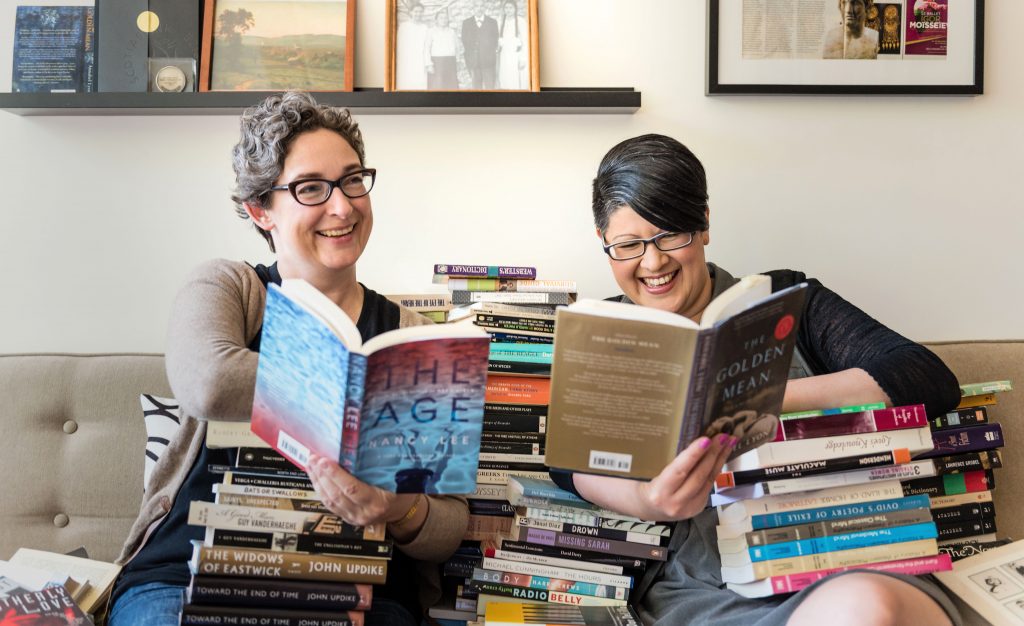
Professors Annabel Lyon and Nancy Lee offer online non-credit novel writing courses that give aspiring writers access to MFA-level instruction that might otherwise be out of reach. Photo: Paul Joseph
Creative Writing professor Nancy Lee, who co-created three novel-writing courses with her colleague Annabel Lyon, says the non-credit format has allowed them to engage with a much broader community of emerging writers while also generating revenue that benefits the program.
“We get to witness writers embarking on their first major projects and to support them as they progress through the various stages of writing a novel. Some of these students end up applying to UBC, while others continue on an independent path towards publication. Our learners come from all over the world and bring an eclectic range of life experiences to their projects. Our courses give them a structured, encouraging process for something they’ve always dreamed of doing.”
Professor Lee adds that the benefits have extended to her own teaching pursuits at UBC. “The pedagogical and technological advances we made in the online teaching of creative writing became the basis of a large-scale TLEF that transformed many of our undergraduate lecture classrooms to a blended learning model.”
For faculty and departments, non-credit offerings create room to test new curriculum, share specialized expertise, engage professional audiences, and explore niche topics that would otherwise be too small for degree programs, all while generating additional revenue.
Designing a non-credit course that works
Do you have a teaching idea or area of expertise that deserves a wider audience? Non-credit programs offer a flexible way to share your knowledge with new learners and test innovative approaches to teaching.
“Many people don't need a full degree, but they do want high-quality education created by university experts.”
Andrew Gray recommends starting with the learner: Who will benefit, and why do they need this knowledge now? From there, he suggests thinking about what skills or insights participants will gain, and how they will be able to apply them in their professional or creative lives. “Choose a topic that you’re passionate about and that others (the general public) are already curious about,” suggests Professor Lee.
Support for faculty
Arts now offers dedicated supports to help instructors develop non-credit courses, including:
- Flexible funding for course releases and development
- Learning design and multimedia support from Arts ISIT
- Audience research and coordinated marketing
- A Canvas Sandbox to test and shape course concepts
Faculty typically begin with a topic connected to their research or teaching interests, then collaborate with the non-credit team to identify the audience, delivery model, and pricing.
Ready to explore your idea?
Arts is now accepting proposals from faculty and departments for new non-credit courses and micro-certificates. Get started by researching your course idea in our Canvas Sandbox — this site doubles as the application form.
Apply by December 15
Questions? Contact Andrew Gray, Director of Innovation and Business Development – andrew.gray@ubc.ca