
Meet Professor Jerry Wasserman: Living a ‘parallel career’
It’s not every day you get home from a long day at school, flop on the couch, flip on the TV, and see your prof.
But that happens all the time for Theatre and English Professor Jerry Wasserman’s students. They’re just as likely to catch him in an episode of The X-Files, or Battlestar Galactica — or on the silver screen — as they are to see him in class.
Ever since he moved to Vancouver from his hometown New York City in 1972, Wasserman has been living out what he calls his “parallel career.”
By day, he’s a prize-winning professor and a respected academic. The rest of the time, he’s hard at play in “Hollywood North,” Vancouver’s booming film industry, where he’s got more than 200 acting credits to his name. “It’s been great having this dual life,” Wasserman says, beaming his megawatt smile. “I’m the luckiest person I know.”
Sure, his work as an actor has seen him consort with celebrities like Will Smith and Ethan Hawke, but he’s adamant that teaching is no bit part in his career.“I love teaching,” he says. “At best, it’s this kind of ridiculously ideal job where you get to talk about interesting things to interested and interesting people. And someone pays you for it? I mean, what could be better than that?”
The classroom, to his mind, is a kind of stage in its own right — especially when it comes to Monday morning survey courses, where students fight to keep their eyelids open. “I figure it’s my job that a) the students stay awake, and b) they stay engaged,” Wasserman says. “And that’s an actor’s skill.”
Acting skills he has in spades, but he says the class-as-theatre analogy has its limits. “There’s a fine line between upstaging your material and utilizing those skills to maximize students’ engagement with the subject at hand.”
It seems to be working — UBC honoured Wasserman with a Killam Teaching Prize in 1998 and the Dorothy Somerset Award in Performance and Development in Visual and Performing Arts in 2005.
Trained as a 20th Century English and dramatic literature specialist at Cornell University, Wasserman became deeply involved in that university’s theatre scene. When he came to Vancouver to teach canonical British writers like Beckett, Woolf, and Conrad in the Department of English, he soon started acting and lecturing on Canadian theatre. “The field of Canadian drama studies was wide open, it was literally brand-new,” says Wasserman, who recalls that at the time he was literally able to read every play ever published in Canada. “I came in right on the ground-floor of a new discipline.”
He became a leading expert in the field, publishing among other things the book Modern Canadian Plays (Talonbooks: 1985), an anthology that has since become the major textbook in the field.
Extremely thankful to work at a university that has supported his double life, Wasserman equally credits lady luck for allowing him to be in the right place at the right time.
“I wake up in the morning sometimes and I have to pinch myself, you know, because I’m living the dream.”
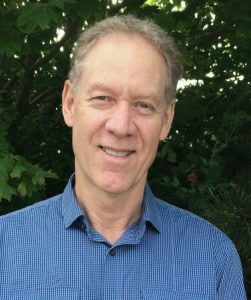
Meet Dr. Michael Blake: Corn-Fueled Curiosity
Of all things to study, Professor Michael Blake’s top pick is corn. He says that’s because big events in human history sometimes hinge on the smallest things. Blake has taught in the Department of Anthropology since 1986. His corn-fueled curiosity has seen him spend a good part of the last 30 years in Latin America and, above all, Mexico, where corn was first domesticated.
Meet Anne Gorsuch: Exploring nuclear missiles & Soviet youth
There aren’t that many cultural historians who can count a nuclear ballistic missile among the reasons for their career choice.
But Professor Anne Gorsuch, who teaches in the Dept. of History, is one of those few.
It was while working as a lobbyist against the American MX missile project during the Reagan years that Gorsuch decided to go back to graduate school to learn more about the Soviet Union. “I didn’t know as much as I had to know about nuclear weapons, or Soviet-American relations in order to do this job well,” Gorsuch explains. “In those days, if you wanted to experience the Soviet Union first hand you had to be either a member of the State Department, or an academic.” Gorsuch, who has been listed as a “popular prof” several times in Maclean’s Magazine, chose the latter route and has not looked back since. She teaches courses about the Soviet Union and the cultural history of the Cold War, and has been chair of the History Honours program.
Not that it has always been an easy path to follow. From setting out to get a doctorate degree at the University of Michigan without ever having taken a Russian language class, to sharing a tiny dormitory room in Moscow with a swarm of cockroaches, there have definitely been some bumps along the way.
Gorsuch’s first book was about Soviet youth in revolutionary Russia. Her current research is on Soviet tourism to foreign countries in the 1950s and 1960s, something permitted only after death of Joseph Stalin. “What did it mean to be ‘Soviet’ after Stalin?” Gorsuch asks outlining questions she hopes to address in the research. “What was the impact of imagining and experiencing the outside world on Soviet identity both individual and national?”
Gorsuch believes that research has an important place in the classroom. “My own research contributes to my excitement and engagement with Soviet history which I try to share with my students,” she says. “It also ensures that what I teach is up to date and informed by recent interests and academic currents in the field.”
She encourages students in her classes to look beyond arms races and summit meetings to focus on the more personal side of Cold War, as related by memoirs and other individual accounts. To students considering history, Gorsuch’s advice is simple — do it! “A history degree provides training in how to think, how to write, how to make an argument, how to understand the world around you, how to empathize with others,” she says, “All skills needed in any work environment.”
By Nick Melling (BA ’06)
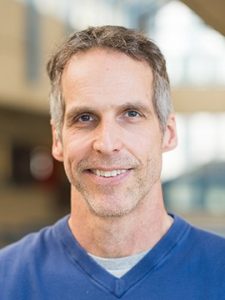
Meet Todd Handy: Integrating learning outside the classroom
Todd Handy is no stranger to working with students, both in and out of the classroom.
A UBC Psychology Professor, Handy interacts with students on daily basis. Director of the UBC Neuroimaging Lab and formally affiliated with the cognitive neuroscience lab, Handy likes working with undergraduate students in research positions because of the unique perspective they bring. He cites their “creative input” and inquisitive nature as assets to his lab environment. In addition, Handy enjoys seeing students become excited by the research they conduct; he remarks that “It’s reinforcing when you see students […] get charged up by issues and questions we’re pursuing.”
“I’ve really enjoyed being able to meet and understand and get to know students in ways you couldn’t in the classroom,” Handy said. “As a teacher I think it’s invaluable and helps understand the mindset of students and what they like and don’t like in classes.”
Heavily involved with students as a faculty mentor and co-chair of the former Faculty of Arts Academic Commuter Transition program, Handy took his teaching to the next level. FAACT was a UBC Peer Program that catered towards the distinct transition needs of first-year commuter students, and gives them a positive beginning to their UBC experience. He was open to collaborating with students, and when he first started, his hope was to meet with students and find out programs and activities that “might be interesting for them”. Key components of FAACT have now been integrated into ASTU 150.
According to Handy, working with students “helps me understand ways I can improve my teaching.” With a faculty member so involved in student life, it’s no wonder that his department won the 2009/2010 Alfred Scow Student Development Award.
By Meghan Roberts (BA 2008, English Literature and International Relations) and updated by Katie Fedosenko (BA 2011, English Literature)
[Photo Courtesy of CASS]
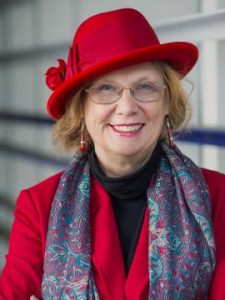
Meet Dr. Arlene Sindelar: Her Path to History
As an undergraduate at Concordia University Chicago, Dr. Arlene Sindelar studied math. She even taught math as a student teacher before graduating. But it was while student teaching that she made an interesting observation—she enjoyed studying math, she liked teaching math, but she didn’t really think much about math once she left the classroom. Instead, she thought about history. History had always captured her imagination and it was history that drew her back.